Sometimes I think of my life backwards. First I was 7 years old, and then my mother asked me what I wanted to be. A singer, I said, while coloring a book of fake Disney princesses that were sold in cheap bookstores in Amman before the ultimate slap of globalization. I knew I had a pretty voice, and my father had a pretty voice, so I thought, what could be more glamorous than wearing a massive blue gown and singing into a bejeweled microphone while adoring fans filled the hall with smiles and loud applause?
My mother, taking a 7-year-old girl a lot more seriously than she should have, looked at me with solemn eyes and asked, “Why?” I said, “to make people happy.” Obviously, even at such a small age I knew I wanted more than to “make people happy,” I wanted to be adorned and popular and have people recognize me in the streets. I wanted to be loved without really being known.
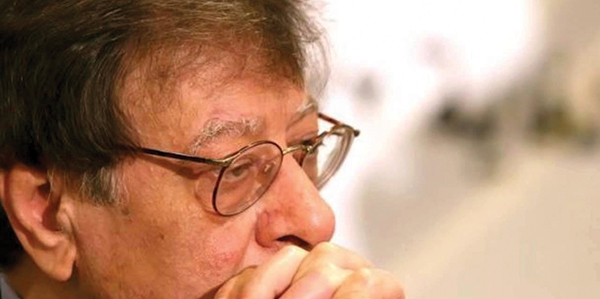
My mom, feeling very disappointed, took a moment of silence to mourn the 7 years she’d spent slaving over a little body that was producing very commercialized dreams about fame and vanity, and in her ever optimistic attitude, she told me that there are other ways to make people happy. She picked up Mahmoud Darwish’s first collection, in a red book that was falling apart, and said, “He makes people happy, but he also makes them think.”
I clutched the book and didn’t understand much, but my mother’s heart was silently leaping, welcoming a chance for me to open my eyes to a world of wonder.
I am 31 years old, and I’m a poet. Nothing makes sense to me like poetry; it just flows out of my stomach like magic. In graduate school, I had to talk about my process, and I realized very quickly that I didn’t have a process. It just happened, poems happened out of heartbreak first, but slowly now, hopefully, out of joy.
♦ “Mama and Mahmoud” is about poetry and loss. Mahmoud Darwish painted the author’s world of poetry but then he continued to move on from a self-imposed subject matter to arrive at a place a lot more beautiful, and a lot more honest.
I think a lot about Mahmoud Darwish. The first poem I ever fell in love with by him was “Madeeh Al Thel Al Aali,” which was never translated, but held my heart in pieces like a ripe pomegranate about to explode. Every time I hear him recite it on small YouTube videos I cry, like I’m watching our cause crumble, like I’m watching my mother die all over again. He stood there, in his early twenties, basking in the aura of his words like no one has ever put words together before, and he was so alone.
In my mind, Mahmoud Darwish was always alone. His loneliness was because he saw pain in verse, and he saw promises of land and return fly with the dust of peace agreements and signatures, and he kept writing. He wrote and wrote until his throat felt dry as summer, but nothing in his self-imposed subject changed, so one day, while drinking his morning coffee, he moved on.
He started writing poems about love, but not any kind of love; love that is real and honest and harsh in the light. Love that moves through pain and with pain and remains beautiful and elegant like rain. He wrote as a scorned woman starting to believe, as a man waiting alone with a glass of red wine, as a child digging and digging for treasures that no one else believed in.
He wrote like the endless ripple in an ocean, and people stopped reading. He wrote about waiting, and letting go, and settling in, and riding buses to the rest of the world to watch it unfold like the skin of a ripe mango pushes itself off.
Mahmoud Darwish lived. He lived like someone free. He traveled and settled in less terrible weathers, away from thuds and the residue of rockets, and fell in love so many times, but mostly, he woke up in the morning and decided to be himself, a self that is sometimes selfish, angry, hateful, passionate, and filled to the brim with hope.
Darwish accepted our terribly complex fate at a time when most people were still clinging to statements, fraught with disregard for the utter exhaustion hitting our collective bones. When he accepted, he lived life with all its sharp edges, without ever succumbing to one end. He moved and moved until his heart gave in, in what was probably a bright hospital room in Texas.
Mahmoud Darwish died exactly a day after my mother died. I figured he couldn’t live in a world without her, because she was the brightest light there ever was. Darwish and my mother never met, but through his red collection, she brought me back to life after she died.
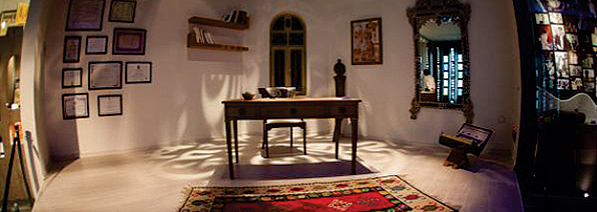
I sit here today, and in the saddest, loneliest corner in my heart, there is a space for Darwish’s latest poems. I love thinking of him sipping cappuccino on a cold day in Ramallah, gesturing to a friend and talking about winter fruits. I imagine him sitting with my mother, she would be drinking tea with mint, and him wine, talking about the subtle way words travel up your spine and explode in your brain like new beginnings.
I’m alone now, without either of them, but somehow, thoughts travel outside of all realms and arrive at my doorstep, giving me a reason to keep trying, to keep wishing for a bright winter and a mild summer. I see them both, in white dresses, roaming around in a world much better than this one, but I think, maybe, I will still get bits of their love, in the most unusual forms.
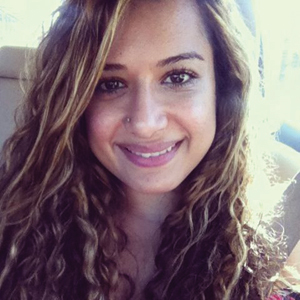
» Tala Abu Rahmeh is a translator and a content editor for This Week in Palestine. She holds an MFA in poetry from American University in Washington, DC. She is a regular contributor to Mashallah News Magazine in Beirut, and Wherever Magazine in New York City. Her poems have been published in a number of magazines and books, including Naomi Shihab Nye’s Time You Let Me In: 25 Poets under 25. Parts of her memoir-in-progress were just published by Tamyras Publishers in a non-fiction book about Beirut titled Beirut Re-collected, which is available in both French and English. Her poem “Cape Cod,” was recently nominated for a Pushcart Prize.