
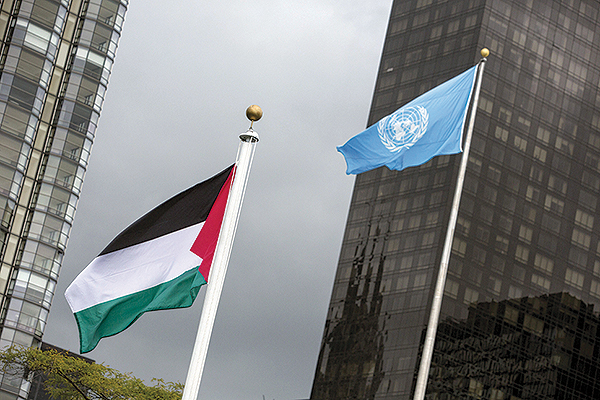
Diplomacy is the skill of managing a country’s international relations with other countries, regions, organizations, and groupings. It is the art of representing one’s country and its interests in another country and ensuring the protection of its rights and dignity abroad. Diplomats implement their country’s policies based on the instructions they receive from their political leadership, and they strive to implement international law, norms, and principles so that they become the basis for interaction among nations. Diplomacy is considered to be the second oldest profession in history, as tribal leaders, kings, and princes dispatched representatives of their countries to other countries to create alliances, to wage wars, and to enhance cooperation and trade. In its traditional approach, it took the forms of bilateral ties between two countries and then evolved to involve multilateral relations that usually include more than two nations.

Diplomats are usually known to cultivate their official personality. They are known to be patient and tactful. Most of the diplomats whom I have met during my diplomatic career are committed government officials who are well-rounded, well-read, and thoughtful. Diplomats show a great deal of commitment to their duties and are good in keeping their feelings under control. Although diplomats can question the execution of a policy, they must never question its purpose. Enjoying a good reputation is a must for every diplomat. It is a career that is usually kept for the crème de la crème in every society.
♦ As is the case in the rest of the world, diplomatic missions in Palestine are not restricted to social and economic concerns; their role, rather, is first and foremost political.
For the State of Palestine, diplomacy has always been the arena where Palestinians from all walks of life have felt compelled to exert every effort to achieve their right to self-determination, independence, and statehood. This is because the axiomatic Question of Palestine, to a large extent, represents contemporary international relations in the Middle East. The problem was provoked by the international superpowers, beginning with the Balfour Declaration of 1917, when almost a 100 years ago, Mr. Balfour, on behalf of the British government, promised Palestine – over which Britain had no legal right – to a people who did not even live there (since only very few of the small community of Palestinian Jews in Palestine in 1917 were Zionists). After that came the Partition Plan and all the UN Security Council Resolutions and US parameters to find a solution to the conflict. The Palestinian people understood early on the role and the weight that international players held when it came to finding a solution to their conflict. In their struggle to end the Israeli occupation of their historical homeland, the Palestinian people, both in Palestine and abroad, have become natural ambassadors of their cause and have felt responsible for explaining to the world at large what it means to live under Israeli military occupation, and the subjugation, injustices, and oppression that occupation lays on their daily existence. Palestinians open up and share their experiences and misery with the hope that a better understanding of their narrative and the history of the conflict will compel countries and activists to undo the injustice that befell the Palestinian people about 68 years ago.
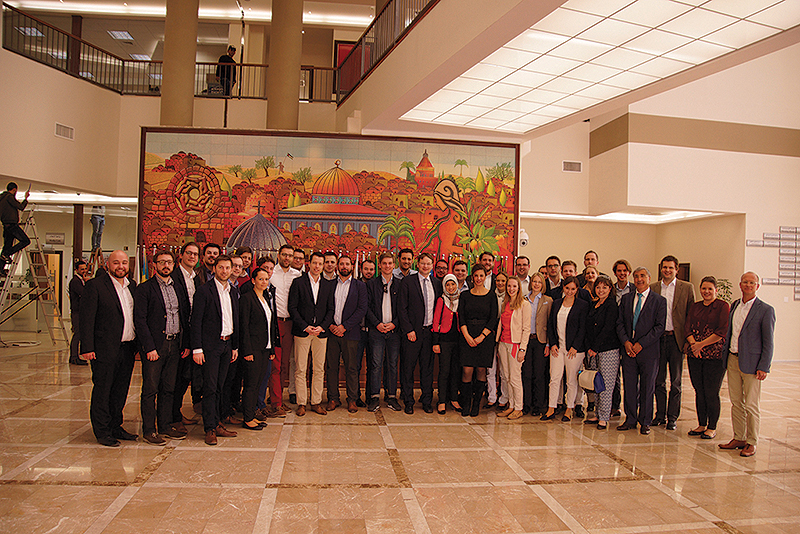
Realizing the asymmetrical nature of the conflict and the huge gap in power that exists between Palestinians and Israelis, diplomatic activism has always represented an essential pillar in the Palestinian leadership’s strategy to restore the Palestinian people’s rights and to end the Israeli occupation. It is crucial to remember also that Palestinian diplomacy evolved in a unique context and thus is different from ordinary diplomatic practice. Palestinian diplomacy emerged and grew abroad in the absence of an independent state structure that enjoyed sovereignty. Despite the difficulties and hardships precipitated by such an abnormality, Palestinian diplomacy has managed over the years to build a strong network of diplomatic relations; it counts many successes and has managed to alter the false perception of the Palestinian people and the Palestinian Problem that the Israelis and their allies were trying to promote. The culmination of its achievements came during the first Intifada when our diplomatic discourse was able to undermine the Zionist propaganda and infiltrate various sectors within Israeli society and the world at large in order to explain the justice of our struggle and the need to end the Israeli occupation of our land. This was made abundantly clear when Dr. Haider Abdel-Shafi, at the opening of the Madrid Conference in 1991, proclaimed, “It is time for us to narrate our own story, to stand witness as advocates of a truth which has long lain buried in the consciousness and conscience of the world. We do not stand before you as supplicants, but rather as the torchbearers who know that in our world of today, ignorance can never be an excuse. We seek neither an admission of guilt after the fact nor vengeance for past iniquities, but rather an act of will that would make a just peace a reality. We speak out, ladies and gentlemen, from the full conviction of the rightness of our cause, the verity of our history, and the depth of our commitment. Therein lies the strength of the Palestinian people today, for we have scaled the walls of fear and reticence and we wish to speak out with the courage and integrity that our narrative and history deserve.”
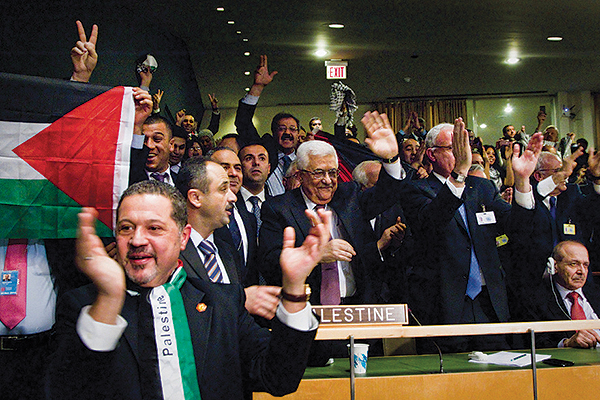
Our political leadership reverted to diplomatic means to put an end to the Israeli occupation of our territory and to find a solution to the problem of Palestinian refugees. The goals that are set for our diplomatic work revolve around the unified vision of ending the Israeli occupation and materializing a sovereign independent state based on the 1967 borders, with East Jerusalem as the capital. All our diplomatic activism focuses on enhancing the legal character of the state and its sovereignty on the ground, and raising awareness about Israeli violations of our political, national, and human rights. We aim to renew our institutions and rebuild the Gaza Strip, especially after the three consecutive Israeli aggressions on that dear part of our country. This is why the Palestinian leadership continues to work with our Arab brethren and with regional and international players to ensure their support in implementing international law and UN security resolutions as the basis for resolving the conflict and attaining our rights. This is also done through bilateral diplomacy by reaching out to every country on the globe through envoys and ambassadors to explain and garner support for our positions and through receiving ambassadors from these countries in Palestine. It is also done through public diplomacy, in which Palestinian diplomats, parliamentarians, academicians, students, and activists take part in activities that aim to promote Palestine and raise awareness of its issues.
Many successes have been achieved lately following on the instructions of President Mahmoud Abbas and Minister Riad al-Malki. Palestine’s status in the United Nations has evolved considerably over last half-century. Beginning as an Observer Mission of a national liberation organization, the Palestine Liberation Organization is now an Observer State. Palestine remains committed to obtaining full United Nations membership – taking its natural place in the international community, among the community of nations, Today, 137 countries recognize the State of Palestine. One of our goals is that the remaining countries will also recognize the State of Palestine. Palestine has also joined more than 40 international treaties and conventions, which enhances its legal standing in the world and benefits our citizens.
Nowadays, many countries (including countries that have not bilaterally recognized the State of Palestine) have established diplomatic representation in Palestine, both in East Jerusalem and in Ramallah.
There are ten consulates general located in East Jerusalem: Apostolic Delegation of the Holy See (Vatican), Kingdom of Belgium, French Republic, Hellenic Republic (Greece), Italian Republic, Kingdom of Spain, Kingdom of Sweden, Republic of Turkey, United Kingdom of Great Britain and Northern Ireland, and the United States of America.
There are also countries that have opened representative offices in Ramallah, the temporary political capital of Palestine: Argentine Republic, Commonwealth of Australia, Republic of Austria, Federative Republic of Brazil, Republic of Bulgaria, Canada, Republic of Chile, People’s Republic of China, Republic of Cyprus, Czech Republic, Kingdom of Denmark, Republic of Ecuador, Arab Republic of Egypt, European Union, Republic of Finland, Federal Republic of Germany, Hungary, Republic of India, Ireland, Japan, Hashemite Kingdom of Jordan, Republic of Korea, Republic of Lithuania, Republic of Malta, United Mexican States, Kingdom of Morocco, Kingdom of Netherlands, Kingdom of Norway, Republic of Poland, Portuguese Republic, Romania, Russian Federation, Republic of Slovenia, Republic of South Africa, Sovereign Order of Malta, Democratic Socialist Republic of Sri Lanka, Swiss Confederation, Tunisian Republic, Ukraine, Oriental Republic of Uruguay, and Bolivarian Republic of Venezuela.
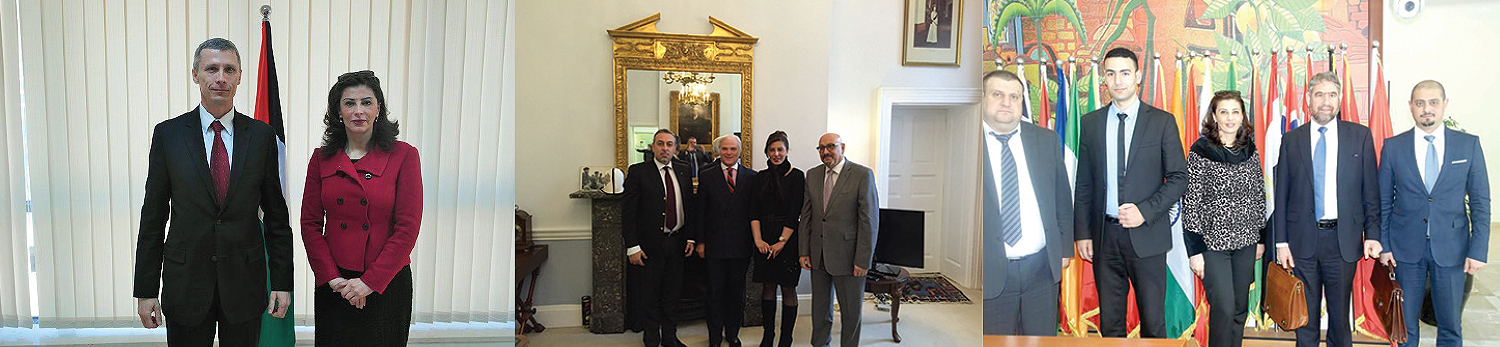
Meanwhile, there are countries that have appointed non-residence representation to Palestine, whereby the representation is done from the capitals of those countries or from capitals of countries neighboring Palestine, such Amman and Cairo: People’s Republic of Bangladesh, Bosnia and Herzegovina, Burkina Faso, Republic of Costa Rica, Republic of Cuba, Dominican Republic, United Arab Emirates, Republic of Estonia, Federal Democratic Republic of Ethiopia, Iceland, Republic of Indonesia, Republic of Kazakhstan, Republic of Kenya, Democratic People’s Republic of Korea, Republic of Latvia, Republic of Malawi, Malaysia, Republic of Mali, New Zealand, Federal Republic of Nigeria, Islamic Republic of Pakistan, Republic of Paraguay, Republic of the Philippines, Republic of Senegal, Republic of Serbia, Slovak Republic, United Republic of Tanzania, Kingdom of Thailand, Socialist Republic of Vietnam, Republic of Zambia, and the Republic of Zimbabwe.
Some countries have also appointed honorary consuls of their countries to Palestine based in the city of Bethlehem: Czech Republic, Dominican Republic, Republic of El Salvador, Cooperative Republic of Guyana, Republic of Honduras, Hungary, Indonesia, Republic of Poland, Slovak Republic, and the Democratic Socialist Republic of Sri Lanka.
In addition to sovereign countries, some international organizations have resident representation in Palestine: International Management Group (IMG), EUPOL COPPS, United Nations Special Coordinator Office (UNSCO), and Temporary International Presence in Hebron (TIPH).
♦ It is important to note that a foreign diplomat’s act of presenting her or his credentials to the Palestinian president is effectively an official recognition of the State of Palestine, which further paves the way for Palestine to become a truly sovereign and independent country.
In conclusion, although a state under occupation, Palestine has managed through its active diplomacy to enhance its standing in the world and situate itself among other nations. The recipe for its diplomatic success requires the active involvement of all Palestinian sectors to support and shoulder the official work in the international arena. The active presence of diplomatic representation of so many countries has also helped our cause and our people. We will continue to work and cooperate with this diplomatic representation until the day our liberation and statehood comes, and we will continue to believe that our day of freedom is near.
» Ambassador Amal Jadou is assistant minister on European Affairs and head of the European Department at the Palestinian Ministry of Foreign Affairs, where she has worked closely with the diplomatic corps serving in Palestine and with Palestinian diplomats around the globe. Prior to this, she served as the deputy chief of mission in Washington, D.C. Following the 2006 elections, she served as director-general of international affairs for the Office of the President of Palestine and was the only female representative in the delegation to the Annapolis Conference. Ambassador Jadou was the first co-winner of the internationally prestigious Sylff Leadership Prize, an honor she shares with Dr. Egla Martinez-Salazar from Guatemala and Goran Svilanovic, ex-foreign minister of Serbia.