
The Palestinian nation is one of the richest in the Arab world. Its wealth is based not only on its natural resources but also on its people, as the Palestinian diaspora makes the Palestinians a multi-cultural nation with an international presence, whose citizens speak different languages and live in various realities. An estimated 8 to 10 million Palestinians live in a global diaspora, in places as diverse as Latin America, the United States, Europe, Australia, and Japan. Most of these diaspora Palestinians are third- or even fourth-generation emigrants, born outside of Palestine. They bear a passport of their countries of birth, and most of them do not even speak Arabic. Nevertheless, they feel truly Palestinian, and they say so with pride, keeping some of the traditions of their ancestors and staying updated on Palestinian history and the present situation.
Given that one of the main values of the Palestinian nation is education, the majority of diaspora Palestinians are highly educated, having studied at the best schools and universities around the world; they have become leading professionals and relevant actors in the development of their adopted countries in such fields as business, health, academics, agriculture, and public policy.
Diaspora Palestinians are silent Palestinian ambassadors who have gained respect in their communities. They make a significant professional contribution, and they show commitment to the development of their countries. By excelling in their work, they are advocates for Palestine, giving an excellent image of who Palestinians are and what they can do under conditions of freedom and democracy.
This recognition has reached the political arena since diaspora Palestinians have been elected to important public positions in such areas as Latin America. A former president of El Salvador; a former minister of foreign affairs and the vice minister for international cooperation of Honduras; and in Chile, the vice minister of health, the attorney general, the vice minister of women’s affairs, and several mayors are all of Palestinian origin and proud of their heritage. To reach these positions, these people had to show a track record of achievements, as exemplified by a solid academic foundation in their respective fields and wide experience in their markets. The majority have lived, studied, and/or worked in countries that belong to the Organization for Economic Co-Operation and Development (OECD) and exhibit the highest standards in development and public policy. Their internationally minded way of thinking includes a contemporary point of view regarding the actions that foster development; they have the capability and will to promote necessary changes and employ a peer-to-peer approach in decision-making.
♦ In the early 1900s, several Palestinian Christians immigrated to Latin America. After four generations, their descendants have become successful actors in the development of their new countries. Even though they don’t speak Arabic, they still feel Palestinian and are willing to make their professional contributions to the development of Palestine.
In Palestine, development relies heavily on foreign aid, as developed economies are financing most, if not all, public infrastructure projects and/or salaries. At the OECD-DAC (Development Assistance Committee), such a model is considered a trap because the Lower Middle-Income Countries that receive this type of aid hardly reach development; they neither build capacities nor strengthen their institutions. For Upper Middle-Income Countries, such aid is therefore replaced by cooperation and by technical assistance that creates sustainable public policy and capacity building. In most cases, these projects are conducted by experienced and successful professionals who share their knowledge in order to implement the changes that are needed for development. Instead of relying on foreign aid that is implemented by foreigners who bear no emotional relation to the Palestinian recipients, Palestine could benefit from its diaspora for technical co-operation, development, and international relations. If Palestinian experts from various countries would propose and apply the best practices that they use in their countries, they would bring more development and could put into practice the strong emotional connection that most diaspora Palestinians feel for their country of origin.
Similarly, Palestine has a noteworthy opportunity to incorporate its diaspora into the executive branch of government. Here, experts could help improve many aspects that relate to development and the economy, either as consultants or in public positions. With their various points of view, rich experiences, and unique approach to all the actors who affect not only Palestinian economic growth and sustainable development, but also its political and diplomatic situation, diaspora Palestinians could help build the needed capacities within more robust institutions.
So wouldn’t it be interesting to think of Palestinian government ministries incorporating Palestinians from the diaspora? This would bring the multiculturalism of Palestine right into its decision-making processes, giving a strong signal both to the world and to Palestinians themselves that we are a 12-million-strong nation with a worldwide presence. This would make other nations view Palestine in a different way, with more stakeholders advocating for solutions to their respective issues. It would also make diaspora Palestinians feel that they are being incorporated as part of Palestine, thus enticing them to commit themselves in a much stronger way for the benefit of their country of origin. It would be a strong signal that could shake the status quo of Palestine, with a renewed dynamism in the international arena. It would be a change of paradigm in Palestinian international relations. In the eyes of the world, Palestine would not only constitute the three million citizens living in the West Bank and Gaza, but the twelve million living all over the world, with influential communities in many countries. The international decisions taken regarding Palestine would have to consider new realities, for example, how their relations with countries such as Chile or Colombia would be affected. The political campaigns in these countries would also try to attract the Palestinian-origin vote with some more favorable positions towards the Palestinian issue.

Palestine could certainly benefit from the experience and network of its diaspora, by considering all Palestinians, either from inside or outside Palestine, as one single multicultural nation. In fact, this is precisely our present challenge. Do we have a single Palestinian identity or are there two kinds of Palestinians? Do those living within the West Bank and Gaza, and those born in the diaspora look at each other with a certain distrust and reluctance? Some native Palestinians think that those in the diaspora are not familiar with the situation in Palestine, as they do not suffer in their own flesh the daily difficulties of living under occupation, and this might be true to some extent. But on the other hand, those in the diaspora regret that some of the Palestinians who live in Palestine do not have the capabilities or opportunities to improve things, arguing at times that the difficult situation that they are living is also a state of mind, preventing them from finding new ways to solve the issues. This, however, is not correct. But in order to understand the situation fully, people have to come and see for themselves. Many diaspora Palestinians are ready to go to Palestine and even eager to work there, knowing that they would make an excellent contribution. Palestine is all of us: native as well as diaspora Palestinians. There is much synergy in bringing together the strengths and capabilities of both sides, and mutual fears will dissipate when both segments know each other better.
The incorporation of diaspora Palestinians into government would trigger other positive consequences. Among these benefits would be the attraction of Palestinian-diaspora Foreign Direct Investment (FDI) in infrastructure. Diaspora public officials traveling abroad would speak the same language as the potential Palestinian investors, which would facilitate negotiations to attract this type of investment: a gateway to development and the creation of companies.
The Palestinian private sector has already benefitted since successful companies in Palestine have been founded by diaspora Palestinians who have made a choice to go “back” to Palestine to establish companies, create jobs, and improve the quality of life. Some others have gone even further, by incorporating diaspora executives in their management structures so as to integrate best practices and build capacities among local executives.
But major obstacles remain; many of which relate to the ongoing occupation. Unfortunately, at this time it is rather unlikely that a diaspora Palestinian would get a permit to live and work in Palestine. This is an important issue that must be solved. The right of return affects not only refugees who live in dismal conditions abroad and hope to return; others have successfully and happily integrated in communities abroad, but they wish to provide a positive contribution to the country of their origin. The lack of these rights sets a strong barrier to many third- and fourth-generation diaspora Palestinian experts and businesspeople who could otherwise be able contribute to the development of Palestine.

The incorporation of diaspora Palestinians in the Palestinian diplomatic corps remains an opportunity, as it would be less affected by residency restrictions since posts are located outside of Palestine. A Chilean Palestinian, raised in Latin America and with Spanish as his or her native language, could be an excellent choice for the Palestinian ambassador to Peru or Colombia; a US Palestinian could be an excellent choice for the representative to the UN or as ambassador in London, and so on. Nowadays, Palestinian diplomats are either native Palestinians or those who come from refugee camps in the neighboring Arab countries, without any presence from the diaspora. Many diaspora Palestinians with senior-level profiles have been representing their countries in such important fora as the OECD, the UN, the WTO, and WHO, just to name a few. Some officials have already received formal diplomatic training at some of the most prestigious diplomatic academies in the world. In the Chilean Ministry of Foreign Affairs, there are more than a dozen diplomats of Palestinian origin who have assumed such relevant positions as the consul general of Chile in the United States and Mexico, the director general of the Chilean International Cooperation Agency (AGCI), and the Chilean ambassadors to Hungary and Ethiopia. As they advocate now for their countries, they can equally do advocacy for Palestine.
♦ With a strong will and commitment, “Diaspora Ambassadors” will do the advocacy and proper lobbying to move forward in the opening of Palestine and the development of our nation.
In fact, an initiative to include diaspora Palestinians in the diplomatic corps has already started with the appointment of ten young Palestinian Latin Americans to a program in which they are offered a scholarship by the Spanish government to complete a master’s degree in the Madrid School of Diplomacy. After one year of studies in Spain, they will train six months in Palestine with the Ministry of Foreign Affairs, also attending classes at Birzeit University. This course will prepare them to serve as Palestinian diplomats advising the ambassadors in the ten embassies, missions, and special delegations that Palestine has in Latin America: Argentina, Brazil, Chile, Colombia, Cuba, Ecuador, Mexico, Nicaragua, Peru, and Venezuela. The intention is to tackle many issues, among them the modernization of the Palestinian Ministry of Foreign Affairs. These diplomats would help amend a lack of trained staff (Palestine sends diplomatic staff to 102 diplomatic missions abroad), provide native speakers in the languages of their postings, increase cultural knowledge of the region, expand Palestine’s international political network, and contribute in many more ways.
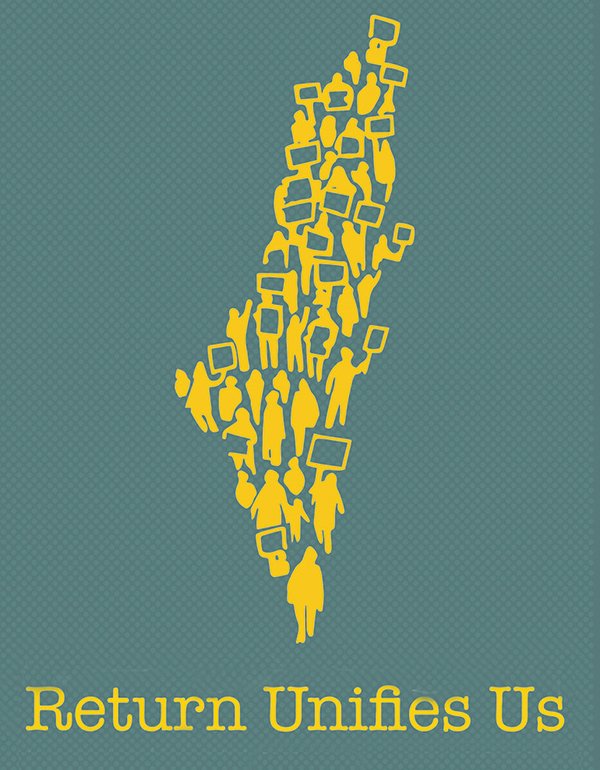
This innovative endeavor constitutes a bold diplomatic move that sets the basis for the incorporation of the diaspora for other geographic regions (such as Europe, the United States, and Australia) and international organizations (UN System); and in the near future to have Palestinian ambassadors who come from the diaspora as well.
» Jorge Daccarett is a Chilean businessman of Palestinian origin who has been the director of the Palestine Foundation in Chile and the Chilean-Arab Business Council. In the past, he has served as the director of the International Cooperation Agency at the Chilean Ministry of Foreign Affairs. He is also professor of international business at the Universidad de Los Andes.