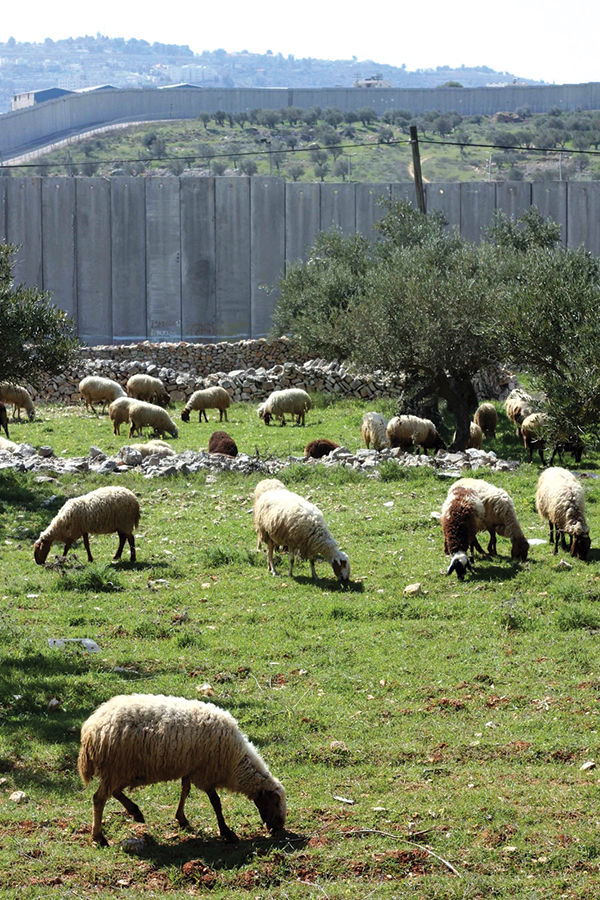
Imagine that two people disagree over who should get to drink a glass of water. As they negotiate, one side is drinking from the glass, making itself stronger as its rival grows weaker. By the time they finally reach an agreement, the glass is empty. This is what is happening in Palestine today. Through the occupation, Israel is illegally exploiting Palestine’s natural resources for its own benefit, enriching its own economy, and holding back Palestinian development. What will be left when peace is achieved?
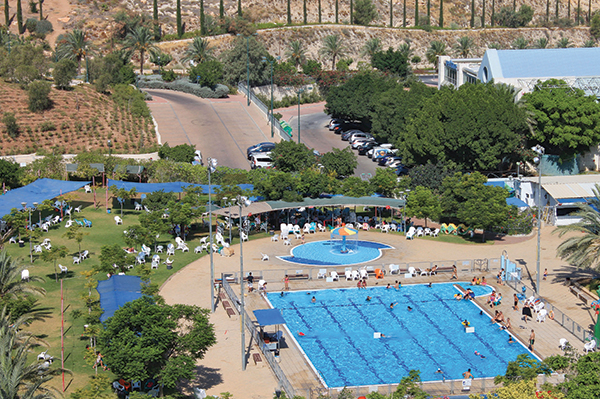
Palestine is rich in natural resources. Unlike many parts of the Middle East, it is blessed with fertile land and plentiful water. Stone is its biggest export,i gas lies off its Mediterranean coast, and thirty percent of the Dead Sea’s shore – one of the most mineral-rich places on Earth – is within its borders. But Israel prevents Palestinians from accessing or developing their resources and meanwhile takes them for itself. To give just a few examples, Palestine has enough oil and gas to be energy self-sufficient, but instead it is Israel’s best customer, because Israel blocks access to these resources.ii Settlers occupy Palestinian land and use six times more water than Palestinians who pay over the odds or go without.iii Israeli companies quarry Palestinian stone in the West Bank then export seventy-five percent of it back to Israel.iv Israel makes $3 billion each year from Dead Sea products whilst Palestine makes $0 because its businesses are denied the opportunity to compete with Israeli companies such as the cosmetics manufacturer Ahava.v As long as Israeli companies are able to illegally exploit Palestinian resources with impunity, Israel has a further incentive to continue the occupation.
In the coming years, the most important of these natural resources is likely to be gas. Stone isn’t so sexy, and Dead Sea mud is a small niche. But everyone needs gas. That’s why Israel has been in such a rush to develop its extraction operations, and why it was left rather red-faced when Egypt – its anticipated major customer – discovered its own huge offshore gas reserves in August. It’s also why the maritime borders between Israel, Palestine, Lebanon and Cyprus are so contested: each wants to stake its claim not to the waters themselves, but to what lies beneath them. The desire to protect its gas operations is a major reason for the Israeli blockade of Gaza that not only limits the livelihoods of Gazan fishermen, but also prevents more ambitious projects aimed to develop Palestine’s share of the offshore gas.
♦ Ideology and politics are not the only drivers of the Israeli-Palestinian conflict. Economics play an important role too. The OPT is rich in natural resources, but through its occupation Israel illegally exploits them for its own benefit. This provides the means for settlements to survive and thrive and holds back the Palestinian economy.
Needless to say, all of this is illegal. Under international law, an occupying power is prohibited both from appropriating the resources under its administration and from exploiting them for its own economic benefit. When Yesh Din, the Israeli human rights organisation, petitioned Israel’s High Court to order the termination of all Israeli mining activity in the West Bank, the court ruled against them, claiming that the Israeli-run quarries benefitted the Palestinians. In reality, only around 200 Palestinians were employed by them.vi
But this is not just a matter for lawyers and businessmen. It affects everyone in Palestine. The World Bank estimates that the entire Palestinian economy could benefit by $3.4 billion if Palestinians had access to their natural resources in Area C.vii Increased access to land would spark a construction boom which would lower prices and increase availability of housing; the goods that could be produced on that land would reduce Palestine’s economic dependence on Israel and increase Palestine’s exporting power; and the places that would produce these goods would provide jobs. With a more self-sufficient economy, Palestine would rely less upon foreign aid and its partnerships with foreign governments could be channelled into long-term investment rather than short-term sustenance.
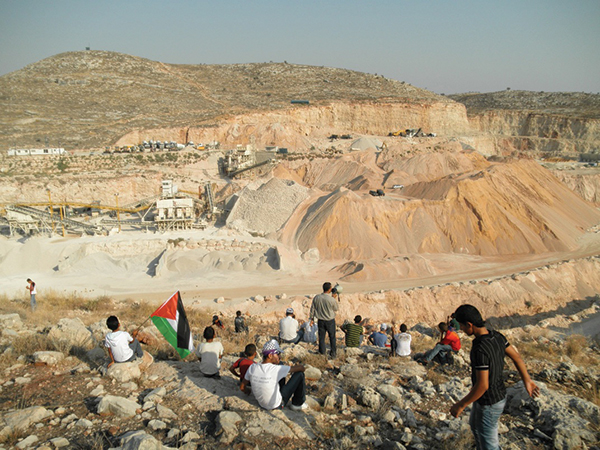
The cynics say that the precarious status quo can continue indefinitely. If the recent outbreak of violence is not enough to persuade them otherwise, they should also know that Israel’s exploitation of these natural resources is in many cases not just politically unsustainable, but environmentally too. Due to overexploitation, the Dead Sea is almost half as long as it was in 1950 and the sea level has declined so far that today there are actually two lakes.viii Quarries are being exhausted with little thought to how to rehabilitate the affected areas. And water aquifers are being overexploited by Israel – to benefit its settlers – and by Gazans – to compensate for the supply they are denied.ix Just last month, the UN predicted that Gaza could be completely uninhabitable by 2020.x If these resources are lost forever, peace will be a hollow victory.
Al-Haq, an independent Palestinian human rights organisation based in Ramallah, is preparing a new campaign called ‘Facts on the Ground’ to draw attention to how natural resources fuel the conflict. The first key message is that the exploitation of Palestinian natural resources provides the means for settlements – the greatest obstacle to peace – to exist and expand. The second is that Israel‘s exploitation of resources holds back the Palestinian economy.
It’s time for action to change the facts on the ground. The world has repeatedly condemned Israel’s actions, but it must do more. In order to bring Israel into line, Al-Haq is calling for international, national, and local-level sanctions that pressure Israel to stop its exploitation of Palestinian natural resources. These sanctions could target individuals and companies that are involved in the illegal exploitation of resources or participate in forms of trade that support such exploitation. Natural resource exploitation may be only one driver of the conflict, but tackling it now will bring us one step closer to a just peace.
» Patrick Sykes is studying towards a master’s degree in political science at Boğaziçi University in Istanbul. He worked with Al-Haq as an intern over the summer of 2015. Follow him on Twitter: @patrick_sykes.
i OEC, (2013), Country Profile: Palestine, available at http://atlas.media.mit.edu/en/profile/country/pse/.
ii Global Research, (2009), War and Natural Gas: The Israeli Invasion and Gaza’s Offshore Gas Fields, available at http://www.globalresearch.ca/war-and-natural-gas-the-israeli-invasion-and-gaza-s-offshore-gas-fields/11680
iii Amnesty International, (2009), Troubled Waters – Palestinians Denied Fair Access to Water, available at http://www.amnesty.eu/en/news/statements-reports/region/middle-east-gulf-states/troubled-waters–palestinians-denied-fair-access-to-water-digest-0420/#.ViTJEH4rLIU
iv Yesh Din: Volunteers for Human Rights, (2012), Yesh Din’s Response to the HCJ Ruling in the Organizations’s Petition Challenging the Legality of Israeli Quarrying Activities in the Occupied West Bank (HCJ 2164/09), available at http://www.yesh-din.org/infoitem.asp?infocatid=172.
v Word Bank, (2014), Area C and the Future of the Palesitnian Economy, available at http://www.worldbank.org/en/events/2014/01/12/area-c-of-the-west-bank-and-the-future-of-the-palestinian-economy.
vi Yesh Din, (2012).
vii Word Bank, (2014).
viii Smithsonian, (2005), The Dying of the Dead Sea, available at http://www.smithsonianmag.com/science-nature/the-dying-of-the-dead-sea-70079351/?no-ist.
ix Amnesty International, (2009).
x The Guardian, (2015), Gaza could soon become uninhabitable, UN report predicts, available at http://www.theguardian.com/world/2015/sep/02/gaza-becoming-uninhabitable-as-society-can-no-longer-support-itself-report.