Spiritual tourism is more than yet another type of tourism. The term implies a criticism of mainstream mass tourism with its tendency toward consumerism. In mass tourism, tourists are hurrying to crowded places on busy holiday programs, their heads overflowing with rather superficial impressions.
Instead, spiritually oriented tourists are looking for deep, meaningful experiences. Spiritual experiences may occur at holy places, monuments, or at natural spots enhanced by a special beauty, atmosphere, or story.
However, spiritual tourism can also go beyond beautiful or religious places and engage ordinary people in seemingly not-so-special places. Thus, modern tourists in the Holy Land increasingly want to meet Palestinians within the contexts of their authentic lives. Religious and non-religious visitors want to learn about customs and practices that contain spiritual elements, or, even more importantly, experience a spiritual quality in their meetings with Palestinians. Most of the time, such spiritual moments do not happen at the information or discussion meetings through which Palestinian spokespeople address tourist groups.
Christian theologian Mary Grey recently wrote a trilogy of books on spiritual pilgrimages in the Holy Land, taking the seasons of Advent/Christmas, Easter, and Pentecost as starting points for an approach in which the lives of ordinary, struggling people are central.i Spiritual moments are said to be about an “epiphany of connection.” For Grey, this represents a radical departure from the familiar stereotypical categories usually applied by tourists when observing or interacting with the people they visit.
Grey’s approach is still uncommon in most tourism programs in the Holy Land, even those that include meetings with Palestinians. When visitors meet Palestinians, it all too often happens that the setting, atmosphere, and time available induce visitors to stereotype their Palestinian hosts for example, as victims, or as exemplars of a culture or religion, or as a specific role, like a journalist.
Small miracles
The epiphany of connection happens when there is a moment that you suddenly see the “other” as fully human, and you are able to relate to the other in mutuality and recognition. Such moments of breaking through barriers are actually small miracles in human interaction, which usually do not come just like that, but need an appropriate setting in which the quality of the encounter receives due care.
♦ Choir song
Refrain
Decorate the courtyard, oh Palestinians
Oh soil of our land
It is shining with dignityVerses
Our sumud is wisdom through knowledge in grace
We are steadfast through truth and discretion
From the Lord of the world we request grace
Through sumud and continuity we will overcome the siege
We will dismantle the Wall through our determination and perseverance
Let us remain faithful to our righteous victims of violence
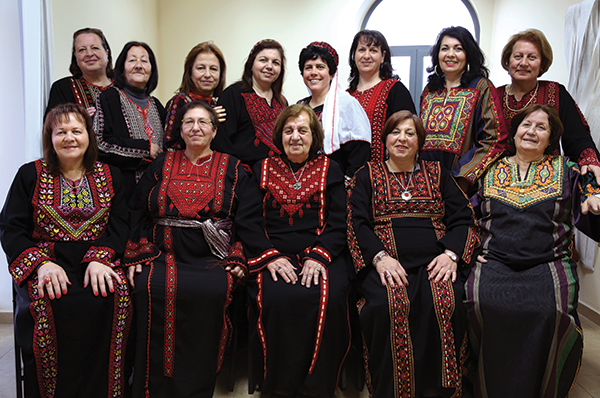
The following is an example of how, in the context of a visitor program, the quality of connection can be raised. It is not so much a matter of organizing fully professional performances or meetings, but creating authentic exchanges. At the Sumud Story House near the Separation Wall in north Bethlehem, the Arab Educational Institute hosts Palestinian women’s groups. Five years ago, some twenty members formed an amateur choir, the Bethlehem Sumud Choir. Initially the women came together in order to be able to “breathe” a little and release the tensions of their lives—stressed as they are by the burdens of the Occupation, the restrictions on their freedom of movement, as well as the multitude of chores they have at home. Singing is an excellent way to experience what the women call “refreshing the soul,” “bringing joy to the heart,” or “expressing love poetry,” all of which come from deep inside the body.
Over the course of time, the women paid more attention to communicating the Palestinian cultural identity, especially because many of their performances have been held at national or heritage occasions, like agricultural or seasonal festivals. In most of their performances, the women wear traditional dresses with Palestinian embroidery, as they say, “to bring the past alive in the present through beauty.” They whistle, clap, gesture, and ululate, as is customary during Palestinian weddings and other happy feasts, and they communicate Palestinian culture through all kinds of songs—national, religious, didactic, and folkloric. By doing so, they bring alive a spiritual kind of sumud (steadfastness, resilience),ii love, connectedness, and spirit of Muslims and Christians living together.
 After increasing numbers of foreign visitors began coming to enjoy their performances, the choir included in their repertoire English-language songs with a strong message of freedom, like “We Shall Overcome” and Bob Dylan’s “Blowing in the Wind.” The spirituality evoked by these songs is obviously not contemplative but engaging. The audience is often inspired to clap and dance together with the women during songs, which can also be humorous or satirical. Group singing and dancing undermine the traditional tourist routine of observing. Tourists participate and express themselves. Singing also brings to life the human stories, which the choir members share with visitors before and after their performances.
Spirituality beside the Wall
Important in creating a suitable atmosphere for spiritual encounters is the setting. In the case of spiritual tourism we tend to think of a quiet, natural place, or a striking piece of symbolic or religious architecture, such as a mosque or church, but what about spaces adjacent to the Wall? Does a violent and oppressive place lend itself to spirituality?
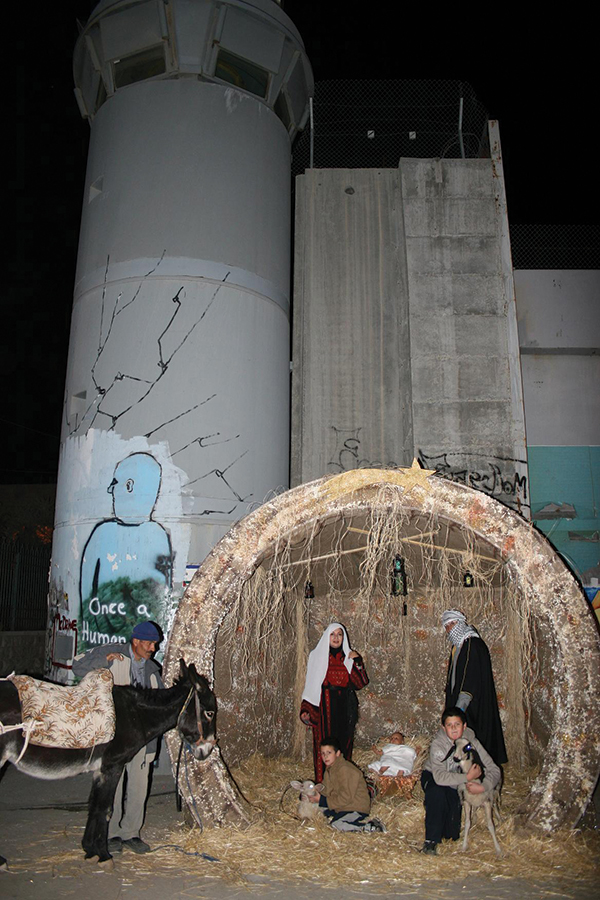
In fact, yes, a space next to the Wall can be a “sacred place” too. (Once Patriarch Emeritus Michel Sabbah from Jerusalem commented that even checkpoints could be turned into “sacred places” and he made a call to people to do so.) The Bethlehem Sumud Choir regularly performs near the Wall, and creates a symbolic event. Examples are a living star of people holding torches in the form of a Bethlehem star, a living key to symbolize the right of return of Palestinian refugees, or even a Christmas stable in front of the military watchtower, where the choir made a video called “The Birth of Jesus Between the Walls.”
Often held in the context of the World Week for Peace in Palestine convened by the World Council of Churches, it has been common during spiritual meetings near the Wall in Bethlehem not only to sing, but also to read, out loud or silently, wishes and prayers in various languages gathered from all over the world by the peace movement, Pax Christi, and the World Council of Churches.
Singing is a way of releasing inner tension, but it’s also a beautiful way to connect. These concerts lead visitors to contemplate what this place once was in the past, and what it could be in the future. The deadly silence of the Wall is replaced by the living silence of reflection and meditation, and the vibrant sounds of group singing.
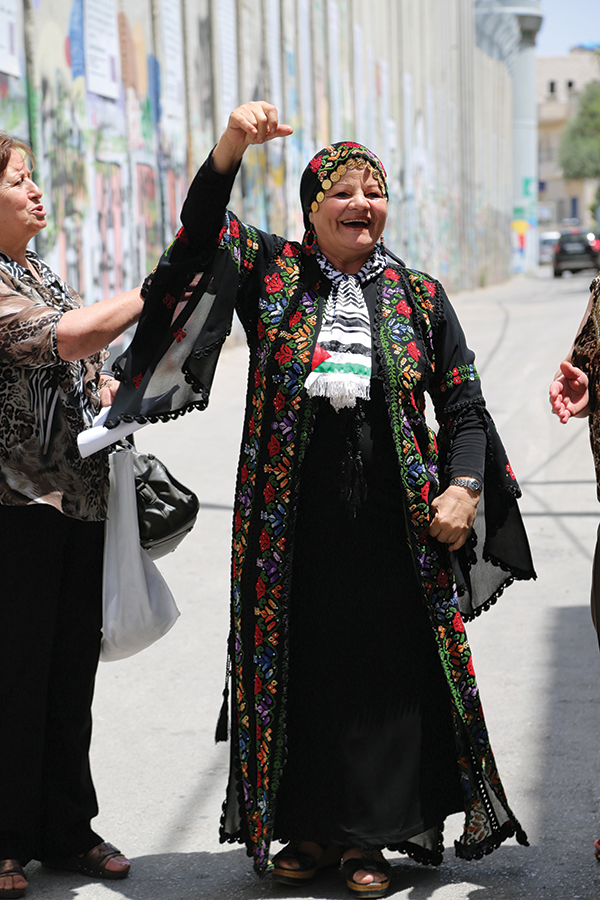 At times, the Arab Educational Institute asks visitors what they experience during the concerts. What visitors tell us is that they strongly feel the contrast between the fragility and intensity of the human voice on the one hand, and the violence of the massive Wall on the other. Moments of silence, contemplation, symbolism, as well as listening to and joining the choir, help people to open up to the hearts of Palestinians so much affected by the Wall and other repressive measures of occupation.
The feelings of the visitors develop from being one-dimensional to becoming multi-layered. They come to feel a deeper respect for the painful memories that Palestinians hold about the infringements on their lives and freedoms and the humiliations they experience. They also experience a silent anger because they understand human suffering, which is the result of oppression and heightens their sense of injustice. Finally, visitors feel a strong sense of spiritual solidarity. Despite all the odds and oppression, Palestinians are still very hospitable, celebrating their cultural pride, and even singing their lives.
♦ Singing can facilitate the required atmosphere for spiritual tourism. At the Sumud Story House near the Separation Wall in north Bethlehem, some twenty women formed an amateur choir, the Bethlehem Sumud Choir. Singing turned out to be an excellent way for their audiences to experience what the women call “refreshing the soul.” In the experience of the audience, the deadly silence of the Wall is replaced by the living silence of reflection and meditation and the vibrant sounds of group singing.
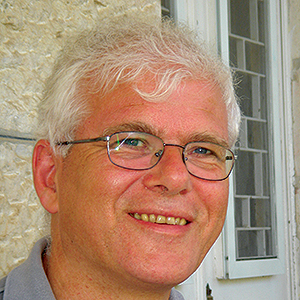
» Toine van Teeffelen is head of education at the Arab Educational Institute in Bethlehem and a tour guide. He has a PhD in discourse analysis from the University of Amsterdam. He lives in Bethlehem with his Palestinian wife and children. For those interested in the Bethlehem Sumud Choir, or the video they made, “The Birth of Jesus Between the Walls,” please contact the Sumud Story House, 02-2746595.
Article photos by: Fadi Abou Akleh.
i Mary C. Grey, The Advent to Peace: A Gospel Journey to Christmas. SPCK, London 2010. The Resurrection of Peace: A Gospel Journey to Easter and Beyond. SPCK, London 2012. The Spirit of Peace: Pentecost and Affliction in the Middle East. Sacristy Press, Durham 2015.
ii For the concept of sumud, see This Week in Palestine, issue 130, February 2009.